10 Essential Tips for Going-To-The-Sun Road in Glacier National Park

Updated: Jul 23
Going to the Sun Road is Dangerous. But, many of the best Glacier Hikes and viewpoints are on this iconic road. So, come on a journey with us as we answer 10 questions you need to ask before exploring Going to the Sun Road in Glacier National Park. Let’s Get Started. To watch the video version of this blog click here or continue reading below.
We’ll discuss the reservation system in a little bit but Glacier National Park is Huge with 8 vast sections and there is a lot to see. but 🌲Are You Planning a trip to Glacier National Park and want to skip hours of research? Fill out a quick 1-minute questionnaire, and get a hyper-custom, day-by-day travel itinerary built specifically for your trip in under 60 seconds 🔗https://campbrood.com/glacier-guides
The first question you should ask is.
What is so Special About Going-to-the-Sun Road in Glacier National Park?
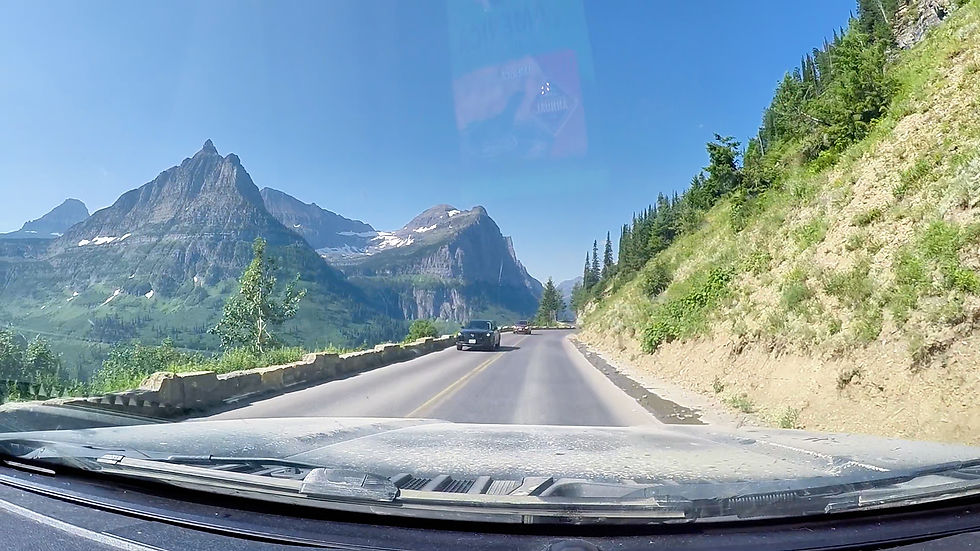
Going-to-the-Sun Road is not just a way to get across Glacier National Park — it’s one of the most iconic scenic drives in the entire country. Built in the 1930s the road stretches about 50 miles from West Glacier to St. Mary and takes you straight through the heart of the park, crossing the Continental Divide at Logan Pass. It’s famous because of the way it was built, literally carved into the mountainsides, with views of glacial valleys, snowcapped peaks, and waterfalls spilling right next to the road. Make sure you close your sunroof. You can see so much of Glacier’s dramatic scenery without ever stepping out of your car, although you’ll definitely want to stop and explore and we’ll share some easy hikes later. But, for many visitors, driving Going-to-the-Sun Road is the highlight of their entire trip, because it packs in so many jaw-dropping views in such a short span for those who don’t enjoy epic strenuous hiking.
But the road isn’t open all year so,
When Does Going-to-the-Sun Road Open and Close?
This is one of the most common questions, and the answer is: it depends. The road is closed every winter because snow buries the alpine section near Logan Pass we’re talking 80 to 100 feet of snow in some spots. Plowing usually starts in April, but it takes crews weeks to remove the snowpack, repair damage, and make the road safe. Typically, the road doesn’t fully open until late June or early July, and it closes again by mid-October when the snow comes back. If you’re visiting in May or early June, you can still drive the lower sections from West Glacier up to Avalanche or from St. Mary up toward Jackson Glacier Overlook, and those sections are still gorgeous. But the real spectacle is to drive over Logan Pass, so you’ll want to plan your trip for July, August, or September if that is your goal. But, even Summer snow storms in June and after the middle of August can close the road for a day or more during peak season. Always check the official Glacier National Park website before your trip for up to date communications on plowing progress and road status.
Many casual travelers can get surprised by this next issue and coming up later we’ll talk about the best viewpoints along the route. Did you know that you need to ask…
Do I Need a Reservation to Drive on Going-to-the-Sun Road in Glacier National Park?
in 2026 the reservation system was removed. But, in prior years and maybe later you might discover from late May through early September, Glacier National Park requires both your entrance pass and a vehicle reservation to drive the road between 6 a.m. and 3 p.m. These reservations were added because the road was getting so crowded that parking lots at places like Logan Pass would be completely full by sunrise. The system helps spread people out, but it does mean you have to plan ahead. Reservations can be tricky to get since they open months in advance and sell out quickly. But don’t worry if you miss one — there are still options. You can enter before 6 a.m. or after 3 p.m. without a reservation, which is actually a great strategy because sunrise and late afternoon are the most peaceful times on the road. But we’ll share more later why morning may not be the best option. Another option is to ride the free park shuttle which you might need a reservation for or book a red bus tour, both of which let you experience the road without driving yourself. But these rules change so again check the NPS website to learn more.
Now that we are through the permit requirements lets discuss the best stops and later we’ll give you some tips to drive Going to the Sun Road safely
Where are the Best Stops Along Going-to-the-Sun Road in Glacier National Park?
This road is full of so many incredible stops that you’ll never get to all of them in one trip. On the west side, Avalanche Creek is a perfect first stop. Here you can walk the handicap accessible Trail of the Cedars, a short loop through a towering old-growth forest, and if you have more time and ability, hike the Avalanche Lake Trail for big mountain and lake views. But bring your swimsuit as there are pull offs to Lake Mcdonald and the river that feeds into the lake for you to sun on the rocks and go for a swim. As you climb toward Logan Pass, the pullouts at places like The Loop, Big Bend, and Oberlin Bend offer some of the most photogenic views of the park. Logan Pass itself is the crown jewel — it’s the highest point on the road and the starting point for both the Highline Trail and the Hidden Lake Overlook Trail, two of the most iconic hikes in Glacier. On the east side, you’ll find Jackson Glacier Overlook, one of the few places you can still see a glacier from the road, and the short hike to St. Mary and Virginia Falls, where you can stand right next to a roaring waterfall. Every turn and pullout has something new, so the best tip is to give yourself time to stop often and take it slow.
Every good national park video needs a dad joke. Since we’re on Going to the Sun Road where you can see a variety of wildlife
What kind of car does a Big Horn Sheep drive? A Lamborghini. Perfect for navigating the twists and turns of Going to the Sun Road in Glacier National Park!
Here are dad joke books for great gifts: Dad Jokes Around the Campfire: https://geni.us/bD0Zua 600 Funniest Dad Jokes: https://geni.us/WHYBfDB To view any product mentioned by us in our videos, click this link: https://www.amazon.com/shop/campbrood As an Amazon Associate, we earn a commission from qualifying purchases.
Ok back to the list and
How Long Does it Take to Drive Going-to-the-Sun Road in Glacier National Park?
If you were to drive straight through without stopping, it would take about two hours to cover the 50 miles. Double the time to four hours if you need to make it a round trip adventure. But the real magic of Going-to-the-Sun Road is in stopping, getting out, and taking your time. Most people spend half a day to a full day on the road, depending on how many hikes they do. For example, you could make it a short half-day trip by just driving the road and stopping at a few overlooks. Or you could turn it into a full day by hiking Avalanche Lake in the morning, enjoying the drive up to Logan Pass, then taking the short Hidden Lake Overlook trail before continuing to the east side. If you’re a serious hiker, pairing the Highline Trail with the drive will easily fill your entire day. The last time we visited Glacier National Park we drove Going to the Sun Road 3 times. The bottom line is: don’t treat this road as a highway to get from point A to point B — treat it as an experience in itself.
Before we get to the next question do you explore national parks from your car or would you rather get out and hike? Join the conversation in the comments today and let us know. If you are more of a hiker you’ll want to ask
What are the Best Hikes off Going-to-the-Sun Road in Glacier National Park?
Some of Glacier’s most famous hikes start right from Going-to-the-Sun Road and are the most popular. Avalanche Lake is a crowd favorite because it’s only a few miles and gets you to a stunning alpine lake surrounded by waterfalls. But to get to Avalanche Lake you must hike Trail of the Cedars, which is flat and accessible, making it great for families or anyone who just wants a quick taste of Glacier’s lush forest. At Logan Pass, the Hidden Lake Overlook is a must — it’s only about 3 miles round trip, but the view of Hidden Lake framed by Bearhat Mountain is unforgettable, and you’ll often spot mountain goats and marmots along the way. But for serious hikers, the Highline Trail is legendary. It follows the Continental Divide with panoramic views the entire way down to the Loop. On the east side, the St. Mary and Virginia Falls hike is perfect if you love waterfalls, and it’s a great option for a family-friendly walk. But parking is limited. Whether you’re looking for a quick stroll or a multiple day adventure, this road has more than most can handle.
Next is a question you better ask ahead of time and later we’ll give you some tips to make the most of your time on Going to the Sun Road.
Can RVs or Large Vehicles Drive Going-to-the-Sun Road in Glacier National Park?
Not the entire road. Because the alpine section is narrow and winding with steep drop-offs, there are strict size restrictions. Vehicles longer than 21 feet, wider than 8 feet, or taller than 10 feet are not allowed between Avalanche Creek and Rising Sun. To put it in easy terms no you can’t drive large vehicles on the best part of Going to the Sun Road. In fact, the road is so narrow that the National Park Service requires full size pickup trucks to pull in their side mirrors. But it wasn’t policed. If you’re in an RV, towing a camper, or driving a bus, you’ll have to park at one of the visitor centers or campgrounds and use the shuttle or a guided tour to experience that section. The good news is, the road was designed for smaller vehicles anyway, driving something compact makes it much easier to navigate the curves and pullouts. Many RV travelers choose to set up camp and then rent a car or hop on a tour to fully enjoy the road. We only saw Class B Camper vans or normal passenger vehicles on Going to the Sun Road during our trip.
Are you liking this question and answer format? We share all of our adventures in this way to help you plan your first trip. Subscribe to our YouTube Channel now so that the next time you search Glacier National Park or another place we’ve been to, our videos show up at the top of your search results. and join our newsletter to stay up to date on the latest National Park news and discounts on the gear we recommend. Ok back to the list and
How Difficult is Going-to-the-Sun Road to Drive in Glacier National Park?
Going to the Sun Road is safe when nobody else is on it. But it can feel intimidating if you’re not used to mountain roads. What makes the road dangerous are people distracted by the views, scared about hitting the cliff or falling off the cliff and those that are in a hurry. Some sections are carved right into the cliffside, with steep drop-offs and no guardrails, especially near Logan Pass. That said, the speed limit is low, usually between 25 and 45 mph and the road is well-maintained. There are frequent pullouts where you can let faster drivers pass or stop to take in the view. If you’re nervous about the drive, you can always ride the free shuttle or book a red bus tour. That way, you get to sit back, enjoy the scenery, and let someone else handle the curves. The most important tip is to go slow, stay alert, and don’t let the drop-offs distract you. There will always be safe places to pull over and admire the view. If you plan to drive the road more than once it is also a good idea to switch drivers so that everyone has the chance to enjoy the views while another is safely focused on the road.
When is the Best Time of Day to Drive Going-to-the-Sun Road?
Some say the number one tip is to start early. If you enter before 6 a.m., you skip the vehicle reservation requirement, you’ll have a much easier time finding parking at places like Logan Pass, and you’ll catch some of the best light for photography. Unless the weather is bad. We drove up to Logan Pass early to hike Highline trail and get those photos and almost stopped dead on Going to the Sun rd because pea soup fog prevented us from seeing 5 feet in front of our truck. Above are photos from Logan Pass 2 hours after we parked. Wildlife like mountain goats, bighorn sheep, and even bears are also more active in the early morning. But, the only wildlife we saw next to the road were Big Horn Sheep in the middle of the day. More important is that bicyclists like to ride in the morning. If you’re impatient, hanging behind a bicycle waiting for a safe place to pass will set you off. But if you wait until later you may find different colors and beautiful sunsets. So, timing is unique for each traveler based on what they want from their day. But, if you pair the drive with one or two hikes to really experience the park, Avalanche Lake and Hidden Lake Overlook are great choices if you want to experience this section of the park in one day. The Highline Trail is perfect for an all-day challenge that will leave no time for anything else. Pack food, snacks, and water since there are no restaurants along the road, and bring layers because the temperature can be 20 to 30 degrees cooler at Logan Pass than down at Lake McDonald.
To learn more about Glacier National Park read this post next!

Comments